Capabilities

Precision CNC Machining Services

At FMMachine, we provide precision CNC machining services for aerospace, automotive, medical, and industrial sectors. Our advanced CNC technology ensures high-quality, custom components with tight tolerances.  Our team provides precision CNC machining services for industrial, OEM, and custom manufacturing applications requiring consistent accuracy, repeatability, and tight tolerances. Our CNC machining capabilities include milling, turning, drilling, and secondary operations performed by experienced machinists using modern equipment and rigorous quality control processes.

From prototype components to production machining runs, we support customers who need dependable precision machining backed by ISO 9001-certified quality standards.

State-of-the-Art CNC Company in Akron, Ohio

Located in a climate-controlled 35,000 sq ft facility in Akron, Ohio, FM Machine Co. is a trusted CNC machining partner for customers who require precision, repeatability, and disciplined process control. Our modern, meticulously maintained equipment delivers consistent results across prototype, low-volume, and production machining projects.

With automated tool changers, live process monitoring, and advanced programming workflows, we maximize uptime and material efficiency—helping customers achieve reliable quality at competitive costs.

Collaborative Precision Solutions
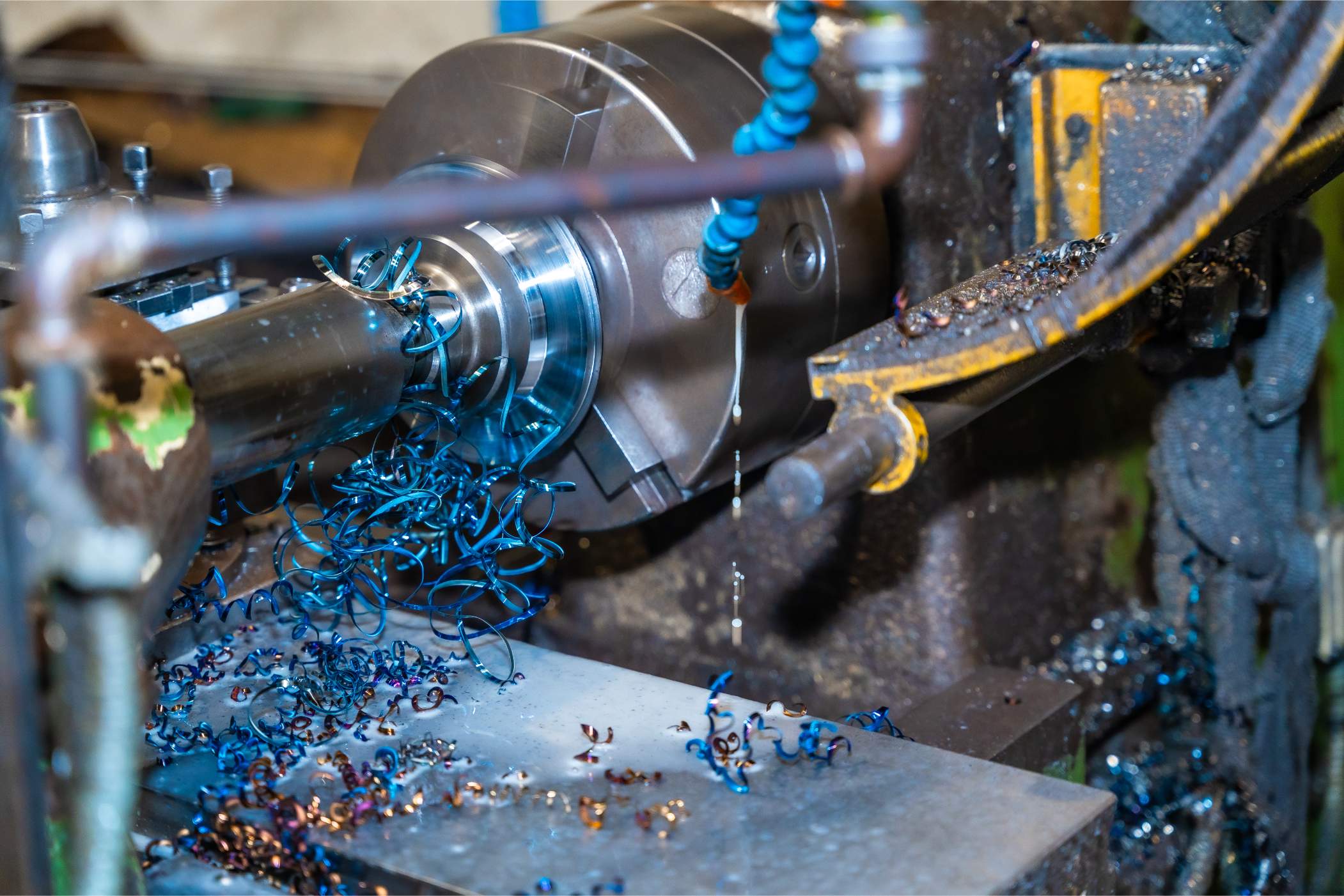
precision cnc shop in akron ohio
High-precision CNC milling in action

At FM Machine Co., we take a partnership-driven approach to CNC machining. From initial design review through final inspection, our team collaborates closely with customers to integrate engineering intent with practical machining execution.

  • Design for Manufacturability (DFM): Early-stage feedback to improve cost efficiency, structural integrity, and lead times.
  • Rapid Prototyping: Quick-turn prototypes to validate form, fit, and function prior to full production.
  • Custom Fixturing: In-house fixture design to support complex geometries and maintain positional accuracy.

Ready to move forward? Contact FM Machine Co. to discuss your machining requirements.

Core CNC Capabilities & Processes

FM Machine Co. delivers precision across a full spectrum of CNC machining disciplines. Our Akron-based team combines multi-axis machining, controlled environments, and proven production controls to manufacture repeatable, production-ready components.

Capability What It Enables Typical Results
3- to 5-Axis CNC Milling Complex multi-surface machining, undercuts, deep cavities, and reduced setups. Accurate true position, flatness, and finishes suitable for coating or assembly.
CNC Turning & Mill-Turn Integrated turning with live tooling for flats, keyways, and cross-holes. Improved concentricity, reduced handling, and consistent repeatability.
Drilling, Tapping & Reaming Precision holemaking and thread creation with in-process verification. Accurate hole size and location with clean, assembly-ready threads.
EDM Machining sharp internal features and hardened or exotic alloys. Stable tolerances without inducing cutting forces.
Surface & Cylindrical Grinding Final sizing of flats, shafts, and critical bearing surfaces. Fine finishes and tight size control for sealing and fit.

Request a quote for your CNC machining project.

Materials & Tolerances

FM Machine Co. machines a wide range of metals and engineering plastics to support demanding industrial, aerospace, medical, and energy applications. Material selection is guided by performance requirements, machinability, and tolerance expectations.

Material Category Grades & Types Common Applications
Aluminum 6061, 7075, 2024 Lightweight structural components, brackets, housings
Stainless Steel 303, 304, 17-4 PH Corrosion-resistant and high-strength components
Titanium Grade 2, Grade 5 High-performance and aerospace-grade components
Exotic Alloys Inconel, Hastelloy, Monel High-temperature and chemically aggressive environments
Engineering Plastics Delrin, Nylon, PEEK Precision bushings, insulators, and lightweight parts

Our CNC machining processes routinely hold tolerances of ±0.001″, with tighter tolerances achievable for select geometries and materials. Surface finishes down to Ra 8 µin are available for critical interfaces.

Quality Assurance & Certifications

Quality is integrated into every stage of our machining process—from contract review through final inspection. Inspection activities are performed in a controlled environment using calibrated metrology equipment.

  • ISO 9001:2015 Certified Quality Management System
  • AS 9120D Certified Aerospace Material Management
  • Documented first article and in-process inspection
  • Material traceability and certificates of conformance available

This disciplined quality framework ensures consistent, repeatable parts that assemble cleanly and perform as engineered.

Industries We Serve

FM Machine Co. supports customers across industries where precision, reliability, and documentation are essential to performance.

  • Aerospace – Structural brackets, housings, and precision components
  • Medical Devices – Tight-tolerance components with controlled finishes
  • Automotive – Engine, transmission, and performance-related components
  • Energy & Power – Turbine, valve, and pump components
  • Industrial Equipment – Fixtures, housings, and machine components
  • Defense – Components built to stringent specifications

A Trusted CNC Machining Partner for Tight-Tolerance Parts

FM Machine is selected by customers who need confidence in machining accuracy, process control, and delivery reliability. Our CNC machining operations consistently produce parts to specification using disciplined inspection and certified quality systems.

From prototype development through repeat production, we apply the same level of accountability and precision—helping customers reduce risk, shorten approval cycles, and maintain consistent performance.

Contact FM Machine Co. to discuss your machining requirements and request a quote tailored to your project.

Get Started with Akron’s CNC Machining Experts

Experience the FM Machine Co. difference—where advanced technology, skilled craftsmanship, and collaborative service converge.

Request a quote or call 330-773-8237 to discuss your CNC machining needs.

Request A Quote Now!

FAQs: How to Choose a CNC Company

What certifications should I look for?
When selecting a CNC partner, certifications demonstrate adherence to industry standards and quality processes.
  • ISO 9001:2015: Validates a mature Quality Management System (QMS) with documented procedures, continuous improvement, and customer focus.
  • AS 9120D or AS9100: Essential for aerospace and defense, these ensure material traceability, risk management, and strict documentation.
  • ITAR Registration: If you’re handling defense-related parts, this registration confirms the shop meets U.S. export compliance requirements.
Always ask to see the certificate copy and check its expiration date. Certified suppliers routinely undergo external audits, so you can be confident in process consistency and traceability throughout your project.
Industry-specific expertise often translates to faster ramps and fewer surprises.
  • Aerospace & Defense: Involves tight tolerances, exotic alloys, and rigorous documentation (e.g., First Article Inspection Reports).
  • Medical Devices: Requires biocompatible materials, cleanroom processing, and FDA-compliant traceability.
  • Automotive & Robotics: Demands high-volume consistency, surface finishes, and durability under cyclic loads.
Review case studies or project summaries on their website. If possible, speak directly with past clients in your sector to understand how the shop handled design changes, material challenges, and delivery schedules.
A broad equipment mix reduces vendor handoffs and lead times.
  • 3-, 4-, & 5-Axis Milling: Enables complex geometries and undercuts in a single setup, minimizing repositioning errors.
  • CNC Turning & Mill-Turn: Allows you to complete turning and milling operations in one machine for concentric precision.
  • EDM (Wire & Sinker): Ideal for hard alloys, fine slots, and delicate features that conventional machining can’t reach.
  • Grinding & Polishing: Achieves sub-micron surface finishes and tight cylindricity tolerances.
Knowing their exact machine models, control software, and tooling options helps you match processes to part requirements. Don’t hesitate to ask for equipment lists or shop floor videos during your evaluation.
Material expertise influences cycle times, tool wear, and final part performance.
  • Aluminum Alloys: 6061, 7075, and specialty grades; widely used for prototypes and lightweight structures.
  • Stainless Steels: 303, 304, 17-4 PH; requires high-torque spindles and coolant management to control heat.
  • Titanium & Exotic Alloys: Grade 2, Grade 5, Inconel, Hastelloy; demand rigid machines and specialized cutting strategies.
  • Engineering Plastics: PEEK, Delrin, Nylon; need careful chip evacuation and low-temperature machining to prevent melting.
Ask about the shop’s tooling library, coating technologies (TiAlN, diamond), and any secondary heat-treat or surface treatment capabilities to support your material choice.
When selecting a CNC partner, certifications demonstrate adherence to industry standards and quality processes.
  • ISO 9001:2015: Validates a mature Quality Management System (QMS) with documented procedures, continuous improvement, and customer focus.
  • AS 9120D or AS9100: Essential for aerospace and defense, these ensure material traceability, risk management, and strict documentation.
  • ITAR Registration: If you’re handling defense-related parts, this registration confirms the shop meets U.S. export compliance requirements.
Always ask to see the certificate copy and check its expiration date. Certified suppliers routinely undergo external audits, so you can be confident in process consistency and traceability throughout your project.
Understanding a shop’s precision limits ensures the parts will function as intended.
  • Dimensional Tolerances: Standard runs often achieve ±0.001″, while specialty processes can hold ±0.00005″ on critical features.
  • Surface Roughness: Common finishes range from Ra 32 µin to Ra 8 µin; ultra-fine grinding and polishing can reach Ra 4 µin or better.
  • Feature Control: Ask about geometric dimensioning and tolerancing (GD&T) capabilities, including flatness, perpendicularity, and concentricity.
Request sample reports or part photos showing measurement data. A capable shop will provide detailed inspection records and explain how they monitor process stability over long runs.
Robust QC processes prevent costly rework and part failures.
  • In-House Inspection: Coordinate Measuring Machines (CMM), optical comparators, and laser scanners for rapid, accurate checks.
  • First Article Inspection (FAI): Formal reports verifying key dimensions and features before full production.
  • Statistical Process Control (SPC): Real-time data collection and control charts to catch deviations early.
  • Traceability: Batch numbering, material certificates, and digital archives of inspection data for future audits.
Discuss their rejection thresholds, non-conformance protocols, and corrective action processes. A transparent shop will share how they handle issues and communicate with you to minimize downtime.
Lead time clarity helps you plan project schedules and inventory.
  • Prototypes & Low-Volume Runs: Some shops offer “quick-turn” in as little as 3–5 business days for simple parts.
  • Production Runs: Depending on complexity and volume, expect 1–4 weeks; expedited options may be available at a premium.
  • Seasonal & Peak Capacity: Ask about how they manage demand spikes and whether they maintain safety stock of common tooling and fixtures.
Get written lead time guarantees where possible and understand their policy for schedule changes or expedited rush orders to avoid surprises.
Effective communication drives project success and reduces misunderstandings.
  • Dedicated Point of Contact: A single project manager or account rep to handle quotes, updates, and problem resolution.
  • Project Tracking: Online portals or ERP access where you can view order status, inspection results, and shipping details.
  • Regular Updates: Scheduled status calls or emails, especially for multi-phase or high-value jobs.
Evaluate their responsiveness during your RFQ process. A proactive shop will ask clarifying questions, flag potential issues early, and suggest optimizations to improve cost or performance.
9. What is their capacity and scalability?
Your CNC partner should grow with your needs, from prototypes to large-scale production.
  • Machine Count & Shift Structure: More machines and multiple shifts mean higher throughput and backup capacity.
  • Flexibility: Ability to handle both small-batch custom work and multi-thousand-piece runs without quality drift.
  • Resource Redundancy: Backup equipment, secondary tooling stock, and cross-training of operators to prevent bottlenecks.
Ask for examples where they scaled up a client’s volume quickly or accommodated last-minute increase in demand—this insight reveals their true operational agility.
Efficient logistics ensure parts arrive on time and in good condition.
  • Packaging Standards: Custom crating, anti-static materials, and moisture-barrier bags for sensitive parts.
  • Carrier Partnerships: Preferred rates with FedEx, UPS, or freight companies for expedited or LTL shipments.
  • Drop-Shipping & Kitting: Direct shipment to your end-customer or assembly facility, complete with labeling and grouped kits.
Confirm transit times, insurance coverage, and tracking capabilities. A well-organized shop will proactively notify you of any delays and provide contingency plans to keep your supply chain moving.