
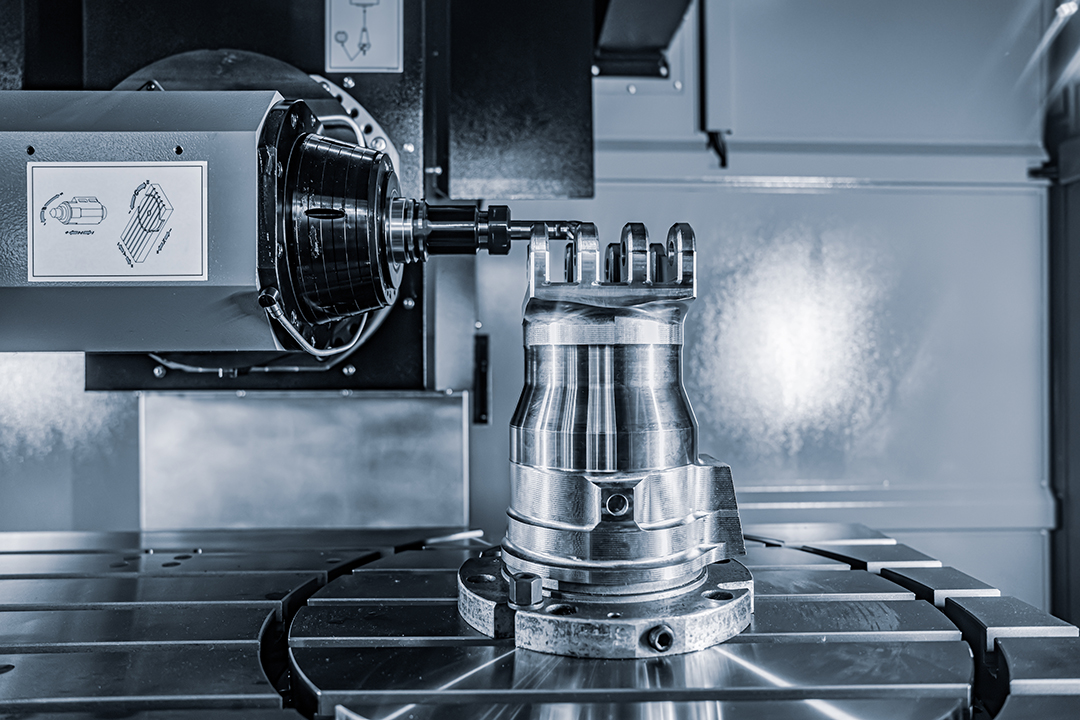
The precision manufacturing world is changing fast, thanks to new technology, customer demand, and hot market trends. Experts predict this industry is set to boom, hitting $205 billion by 2031 and growing over 10% each year from 2024 onwards. For a broader look at where the industry is headed beyond these five insights, see our overview of precision manufacturing industry trends.
The top 5 insights shaping the future of precision manufacturing will change how companies work, compete, and innovate in this quick-moving space. From the rise of Industry 4.0 and smart manufacturing to the growing focus on reverse engineering and sustainability, these insights give us a sneak peek into the exciting possibilities and challenges ahead for precision manufacturers.
1. Increasing Demand Across Key End Markets
Precision manufacturing is experiencing strong demand from various end markets, including automotive, aerospace and defense, medical technology, and electronics. These industries are increasingly using precision components to enhance performance, efficiency, and reliability.
Each sector mentioned above requires specific expertise from the precision manufacturing industry:
- Automotive: Tight tolerances and complex geometries
- Aerospace and Defense: Advanced materials like titanium and nickel alloys
- Medical Technology: High accuracy and repeatability for patient safety
- Electronics: Miniaturization and tight tolerances for advanced devices
To meet these complex demands, fabrication capabilities and access to a comprehensive equipment list are essential to staying ahead.
2. The Rise of Industry 4.0 and Smart Manufacturing
Industry 4.0 is reshaping the precision manufacturing landscape. Key technologies driving this transformation include:
- IoT – improving machine communication and predictive maintenance
- AI – optimizing scheduling and quality control
- Automation – increasing speed and reducing error
- Big Data – uncovering insights from production and customer feedback
3. Reverse Engineering: A Key Enabler of Innovation
Reverse engineering services have emerged as a critical capability in precision manufacturing, allowing companies to analyze and recreate existing parts. According to TechTarget, reverse engineering helps companies innovate faster, improve products, and cut development time.
- Faster product development
- Better design optimization
- Streamlined maintenance and repair
4. Additive Manufacturing and 3D Printing
Additive manufacturing, or 3D printing, enables the creation of complex geometries and customized parts. According to Statista, the global 3D printing market is projected to reach $51.7 billion by 2030. Advantages include:
- Faster prototyping and reduced lead times
- Design flexibility and customization
- Reduced waste and inventory costs
For guidance on when to choose printing over subtractive methods, see our CNC machining vs. 3D printing comparison.
5. Emphasis on Sustainability and Eco-Friendly Practices
Precision manufacturing is increasingly focusing on eco-friendly practices. According to a Bain & Company study, 72% of consumers are willing to pay more for sustainable products. Strategies include:
- Energy-efficient processes
- Recycling programs
- Eco-conscious materials
Team Up with FM Machine for Better Manufacturing
The world of precision manufacturing is always evolving, which is why partnering with experts like FM Machine is key. Our technicians excel at CNC machining, reverse engineering, and prototype machine building. We also offer top-notch machined parts inspection services.
Our team brings years of experience and fresh ideas to every job. Whether you need part production, inspections, or reverse engineering solutions, we’ve got the knowledge and tools to do it right.
We’re constantly learning and evolving with the latest technology and processes to ensure your success.
Want to learn more? Contact us today, or go straight to our CNC machining quote request page to find out how we can help your business grow through expert precision manufacturing services.