
Unplanned downtime costs manufacturers an estimated $50 billion a year, and most of it is preventable. AI and automation are changing that equation fast, particularly in precision manufacturing. From CNC machining floors to supply chains, machine learning tools are cutting waste, tightening tolerances, and giving manufacturers real-time visibility they never had before. For industries like aerospace, automotive, and medical devices, where a fraction of a millimeter can mean the difference between a part that works and one that fails, these technologies aren’t optional extras. They’re becoming the baseline.
AI in Manufacturing Shaping Modern Production Systems
AI in manufacturing is not just an emerging technology but a critical enabler of digital transformation. Manufacturing systems now rely on machine learning and AI algorithms to monitor machining processes and optimize efficiency. Automated systems powered by AI identify inefficiencies, reduce downtime, and ensure production schedules are followed with precision.
Robotic systems and digital manufacturing tools are integrated into production lines to perform repetitive tasks with minimal human error. These smart factories can make real-time decisions, adapt to changes in demand, and streamline energy consumption. This shift allows companies to achieve cost savings while maintaining exact specifications across every stage of production.
Precision Machining Enhanced by AI and Automation
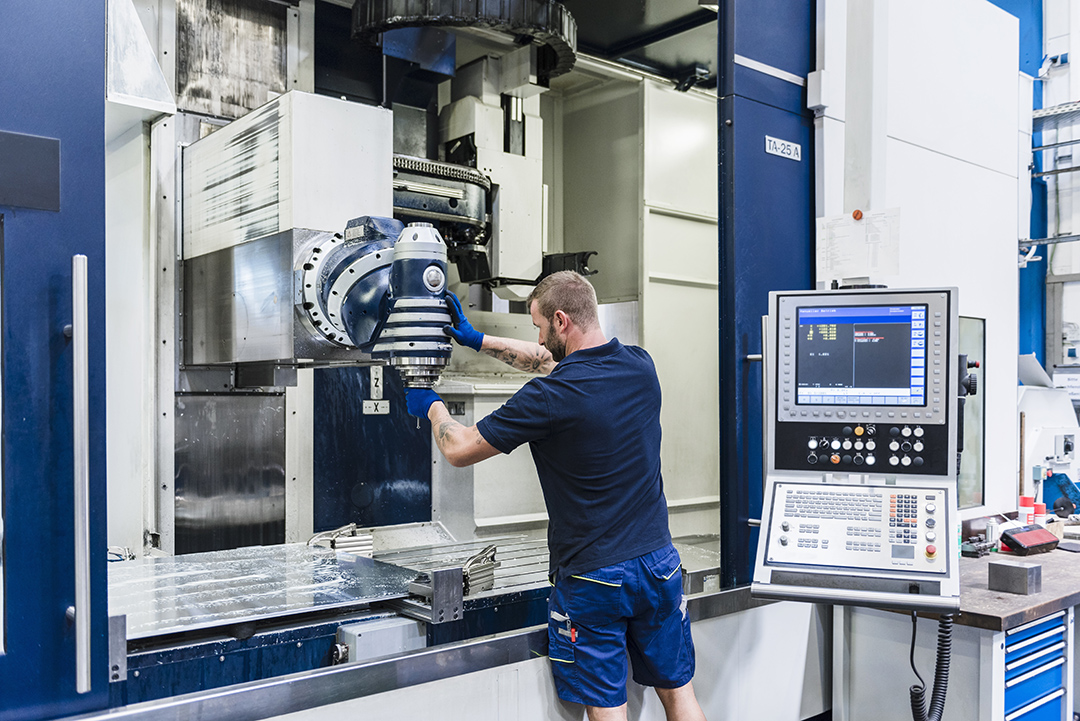
Precision machining requires the ability to meet tight tolerances and produce complex geometries. Automation in precision machining has transformed CNC machines into intelligent systems capable of real-time adjustments. AI algorithms guide machining processes to maintain high accuracy and reduce waste. This is critical in sectors like aerospace and medical devices, where exact specifications and complex designs are essential.
By minimizing manual intervention, advanced manufacturing processes now achieve consistent output even on low-volume runs. Human workers are supported by digital manufacturing platforms that handle complex parts with greater speed and reliability, making precision manufacturing a cornerstone of modern industry innovation.
Transforming Asset Management with Predictive Maintenance
Traditional manufacturing processes relied on reactive maintenance, often resulting in unexpected downtime. Predictive maintenance powered by AI has introduced a new approach to asset management, using data from connected sensors to forecast equipment issues before they occur.
Reducing Downtime with Predictive Analytics
AI algorithms analyze vibration, temperature, and performance data to identify potential problems. Predictive analytics help companies reduce downtime, extend machine lifespan, and lower maintenance costs. By predicting demand for replacement parts and scheduling service proactively, manufacturers maintain production efficiency while avoiding costly interruptions.
Supporting Long-Term Cost Savings
This method not only lowers repair expenses but also supports energy consumption management and ensures consistent production processes. Predictive maintenance strengthens the reliability of automated systems, making it a vital part of modern manufacturing strategies.
Smart Manufacturing Creates Connected Production Environments
Smart manufacturing, often associated with Industry 4.0, brings AI, real-time data, and industrial IoT together into a single connected ecosystem. Rather than replacing traditional factories overnight, it builds on existing infrastructure step by step, layering in automation, digital twin technology, and predictive analytics until the entire operation becomes more responsive and efficient.
The practical result is a production environment that can adapt. Schedules adjust based on real demand, equipment issues surface before they cause downtime, and supply chains become more resilient to disruption. The table below shows how this compares to the traditional manufacturing model most shops are moving away from.
| Traditional Manufacturing | Smart Manufacturing with AI |
| Heavy reliance on manual intervention | Automated systems with real-time decision making |
| Fixed production schedules with limited flexibility | Adaptive schedules optimized by AI algorithms |
| Increased risk of human error | Reduced error rates through predictive analytics |
| Reactive maintenance and frequent downtime | Predictive maintenance that reduces downtime and costs |
| Minimal use of production data | Continuous insights with digital twin and smart analytics |
Supply Chain Management Supported by AI Technologies
Supply chain management is another area where AI technologies are driving change. By predicting demand, monitoring raw materials, and identifying inefficiencies, companies can enhance decision-making and reduce lead times. AI algorithms provide real-time insights into inventory, logistics, and production schedules, ensuring that supply chains operate smoothly and more cost-effectively.
This approach also helps to reduce waste and optimize efficiency across global supply chain networks. Manufacturers gain a competitive advantage by integrating smart manufacturing technology into supply chain systems, leading to faster responses to market changes and greater reliability in meeting customer requirements.
Quality Control Strengthened by Automated Systems
In precision manufacturing, quality control is not a final checkpoint, it is built into every stage of production. Automated systems powered by AI analyze parts against exact specifications in real time, catching surface defects, dimensional inconsistencies, and measurement errors that manual inspection can miss. Vision-based systems and coordinate measuring machines work continuously without slowing output, meaning every unit gets inspected regardless of volume. The result is fewer defective parts, lower liability risk, less waste, and a finished product that meets industry standards every time. For customers in aerospace, medical devices, and automotive manufacturing, that consistency is not a nice-to-have. It is the whole point.
Digital Twin Technology Supporting Complex Designs
A digital twin is a virtual replica of a machine, system, or entire manufacturing process, continuously updated with real-time data from sensors and equipment on the floor. Rather than discovering problems during production, manufacturers can simulate machining processes, test tight tolerances, and model energy consumption before a single part is cut.
For complex, high-stakes work in aerospace, medical devices, and automotive manufacturing, this matters enormously. Validating a design virtually reduces waste, shortens lead times, and eliminates costly surprises when working with intricate geometries or legacy components. Combined with reverse engineering services, digital twin models give manufacturers a reliable path to recreating and improving existing parts with confidence.
FM Machine Driving Precision Manufacturing Excellence
FM Machine has been a trusted precision manufacturing partner since 1963. From our Akron, Ohio shop, we deliver tight-tolerance CNC machining, fabrication, reverse engineering, and prototype development for aerospace, automotive, and medical device customers who cannot afford errors.
We hold tolerances to .000050 inches, carry ISO 9001:2015 certification, and bring over six decades of hard-won manufacturing expertise to every project, whether it is a single prototype or a complex production run.
Ready to get started? Contact us today to request a quote or talk through your requirements with our team.