
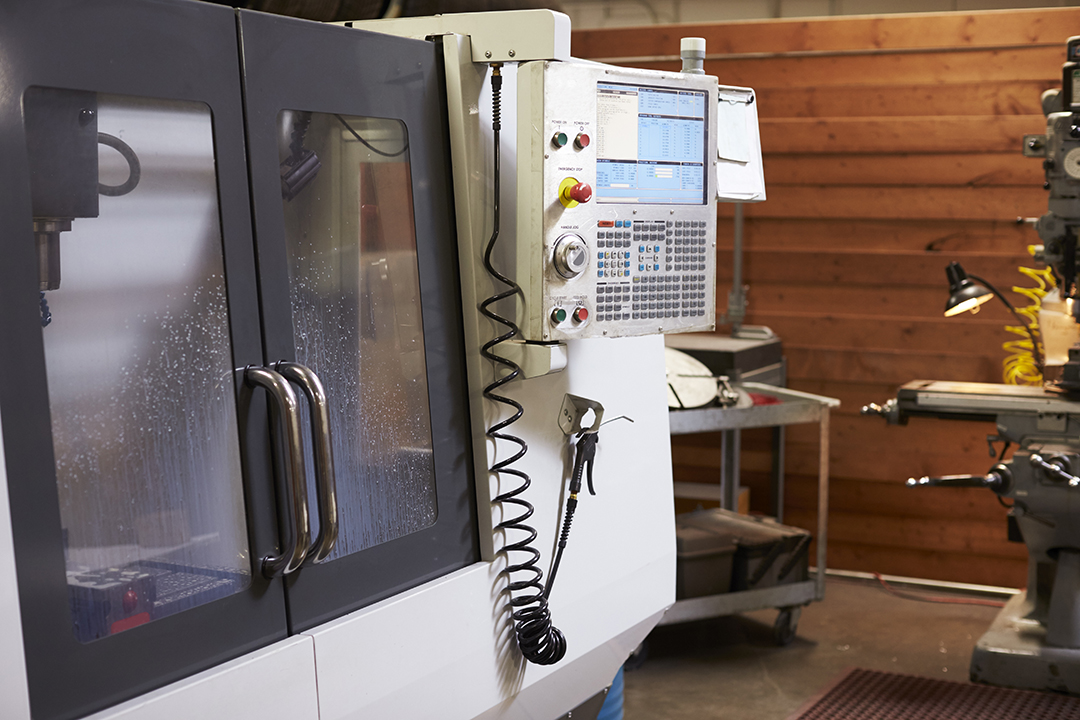
How Precision Manufacturing Supports Innovation in Product Development
Innovation drives competitive advantage, but transforming breakthrough ideas into market-ready products requires manufacturing capabilities that match creative ambition. The relationship between product development and manufacturing determines whether innovative concepts succeed commercially or remain unrealized potential. Precision manufacturing serves as the critical link between design vision and functional reality.
The Manufacturing-Design Feedback Loop
Product innovation thrives when design teams understand manufacturing possibilities and limitations. Early engagement with precision manufacturing partners establishes realistic boundaries while identifying unexpected opportunities. This collaborative approach prevents designs that look impressive on screens but prove impossible or prohibitively expensive to manufacture.
Design for manufacturability (DFM) reviews conducted during concept development catch potential issues before they become expensive problems. Manufacturing partners analyze proposed designs, identify areas requiring clarification, suggest alternative approaches that reduce complexity, and recommend material or geometry changes that improve manufacturability without compromising functionality.
This iterative feedback accelerates development cycles. Rather than completing full designs only to discover manufacturing barriers, teams refine concepts progressively based on manufacturing input. Each iteration moves closer to optimized designs that balance performance requirements with manufacturing efficiency.
Rapid Prototyping and Concept Validation
Innovation requires experimentation. Products rarely emerge fully formed from initial concepts—they evolve through multiple prototypes as teams test assumptions, identify weaknesses, and refine features. Precision manufacturing capabilities directly impact how quickly teams can iterate through prototype generations.
Modern CNC machining enables rapid prototype production from actual production materials rather than relying solely on 3D-printed approximations. This material authenticity proves critical for products where material properties affect performance. Aerospace components, medical devices, and automotive parts require testing with actual materials to validate strength, durability, and functional characteristics.
Low-volume production runs bridge the gap between prototypes and full production. Instead of jumping directly from hand-built prototypes to mass production, companies can produce small batches using actual manufacturing processes. These bridge productions reveal issues that prototypes miss—problems with fixturing, measurement, assembly, or quality control only surface when producing multiple identical units.
Material Innovation and Experimentation
Material science advances continuously, offering new possibilities for product performance. High-strength alloys, specialized polymers, composite materials, and advanced ceramics enable product characteristics impossible with traditional materials. Accessing these material innovations requires manufacturing partners with experience working beyond conventional material sets.
Precision manufacturers maintain relationships with material suppliers, understand material properties, and have developed techniques for machining challenging materials. This expertise proves invaluable when product requirements push beyond standard material selections. Teams can experiment with emerging materials confident that manufacturing partners can translate material properties into finished components.
Material substitution opportunities often emerge during manufacturing discussions. A manufacturing partner might suggest alternative materials offering superior properties at lower costs, better availability, or improved machinability. These suggestions spark design refinements that enhance product performance while controlling costs.
Advanced Manufacturing Techniques
Manufacturing technology evolves constantly, opening new design possibilities. Five-axis machining enables complex geometries previously requiring assembly from multiple parts. Wire EDM creates intricate internal features impossible with conventional cutting tools. Swiss-style turning produces extremely precise small-diameter components with exceptional surface finishes.
Access to advanced manufacturing techniques expands design freedom. Engineers can specify features optimized for function rather than constrained by manufacturing limitations. Internal cooling channels, complex contours, integrated assemblies, and optimized weight distributions become practical when manufacturing partners possess appropriate capabilities.
Emerging technologies like additive manufacturing complement traditional precision machining. Hybrid approaches combine 3D printing for complex internal structures with precision machining for critical surfaces and tight-tolerance features. This technological blend enables innovation that neither technology achieves independently.
Tolerance Optimization and Performance Enhancement
Tight tolerances enable product innovation by ensuring consistent performance across all manufactured units. Components that must interface precisely, mechanisms requiring specific clearances, and assemblies demanding exact alignment all depend on manufacturing capabilities that maintain dimensional accuracy within specified limits.
Understanding tolerance implications helps development teams optimize specifications. Not all features require identical precision—some dimensions critically affect function while others simply need reasonable consistency. Manufacturing partners guide tolerance specification, identifying where tight tolerances genuinely benefit performance versus where they simply increase costs without corresponding value.
Statistical process control data from production runs informs design refinements. When manufacturing data reveals particular dimensions clustering near specification limits or showing excessive variation, design teams can adjust specifications, modify geometries, or change materials to improve manufacturing consistency and product reliability.
Scale-Up Support and Production Transitions
Moving innovative products from prototype to production represents a critical phase where many promising concepts fail. Production-scale manufacturing reveals challenges invisible at prototype quantities: tooling requirements, fixture designs, quality control procedures, and process documentation all require development before consistent production becomes possible.
Precision manufacturing partners with production experience guide this transition. They understand capacity planning, identify required tooling investments, develop work instructions, establish quality checkpoints, and train production personnel. This institutional knowledge prevents costly mistakes during scale-up phases.
Production pilots conducted before full-scale launches validate manufacturing processes under real conditions. These trial runs reveal bottlenecks, quality issues, or procedural gaps while production volumes remain manageable. Corrections implemented during pilots prevent disruptions when full production begins.
Cost Engineering and Value Analysis
Innovation balanced with cost control determines commercial viability. Revolutionary products priced beyond market acceptance represent failed innovation regardless of technical merit. Development teams must consider manufacturing costs throughout design processes rather than treating cost as an afterthought once designs complete.
Manufacturing partners contribute cost engineering expertise during development. They identify cost drivers, suggest design modifications that reduce expenses, recommend make-versus-buy decisions for subcomponents, and provide cost estimates for design alternatives. This real-time cost feedback keeps development efforts aligned with target price points.
Value analysis examines whether design features justify their costs. Every design decision—material selection, tolerance specification, surface finish requirements, special processing—carries cost implications. Systematic value analysis ensures spending focuses on features customers value rather than over-engineering beyond market requirements.
Quality by Design Integration
Quality cannot be inspected into products—it must be designed in from the start. Precision manufacturing partnerships support quality-by-design approaches by integrating quality considerations throughout development cycles. Rather than discovering quality challenges during production, teams proactively design products for consistent manufacturing quality.
Failure mode and effects analysis (FMEA) conducted jointly between design and manufacturing teams identifies potential quality risks. This systematic examination considers how components might fail, what causes failures, and how designs can eliminate or mitigate failure modes. Designs incorporating FMEA insights demonstrate superior reliability and reduced warranty costs.
Process capability studies determine whether manufacturing processes can consistently meet design specifications. When process capabilities fall short of requirements, teams must either tighten process controls or relax specifications. Addressing these issues during development prevents quality crises during production.
Intellectual Property Protection
Innovation creates valuable intellectual property requiring protection. Manufacturing partners play important roles in IP security through confidentiality agreements, secure facilities, and disciplined information management. Trusted manufacturing relationships enable companies to pursue innovative designs without excessive IP exposure risks.
Domestic manufacturing partnerships often provide stronger IP protection than offshore alternatives. Domestic legal frameworks, physical proximity enabling facility audits, and shared business cultures reduce IP theft risks. Companies balancing innovation with IP security frequently prioritize domestic manufacturing relationships despite potential cost premiums.
Manufacturing process innovations developed jointly between design and manufacturing teams can generate additional IP value. Unique manufacturing approaches, specialized tooling designs, or proprietary process parameters may warrant patent protection, creating competitive barriers beyond product designs themselves.
Regulatory Compliance and Certification Support
Innovative products in regulated industries face complex approval processes. Medical devices require FDA clearance or approval. Aerospace components need AS9100 certification. Automotive parts must meet industry-specific quality standards. Manufacturing partners with regulatory experience accelerate approval processes while ensuring compliance.
Documentation requirements for regulated products extend beyond design specifications to encompass manufacturing processes, quality control procedures, and traceability systems. Manufacturing partners maintain documentation systems meeting regulatory requirements, reducing the administrative burden on product development teams.
Design verification and validation testing often requires manufactured components rather than prototypes. Manufacturing partners produce test articles meeting specifications, maintain batch records documenting production processes, and provide material certifications supporting regulatory submissions.
Sustainability and Environmental Innovation
Environmental considerations increasingly influence product innovation. Regulations restricting hazardous materials, customer preferences for sustainable products, and corporate environmental commitments drive design decisions toward more sustainable approaches. Manufacturing partnerships support environmental innovation through sustainable manufacturing practices.
Material selection affects product environmental footprints significantly. Manufacturing partners with material expertise can suggest sustainable alternatives offering comparable performance with reduced environmental impact. Recycled materials, renewable resources, or materials with lower embedded energy enable environmental improvements without sacrificing function.
Manufacturing process efficiency directly impacts product sustainability. Partners employing optimized toolpaths, effective coolant systems, and efficient material utilization reduce waste and energy consumption. These process improvements decrease environmental impact while often reducing costs simultaneously.
Creating Competitive Advantages Through Manufacturing Innovation
Companies that view manufacturing as strategic advantage rather than commodity service unlock innovation potential competitors miss. Manufacturing partnerships contributing design insights, technical expertise, and process innovations become force multipliers for product development efforts.
This strategic approach requires selecting manufacturing partners based on innovation capacity rather than simply lowest cost. Partners demonstrating continuous improvement cultures, investment in advanced technologies, and collaborative engagement with customers deliver greater long-term value despite potentially higher initial costs.
The concept of allied precision manufacturing extends beyond single-source partnerships to encompass networks of complementary manufacturing capabilities. Leading companies develop ecosystems of allied precision manufacturing partners, each contributing specialized expertise—one excelling in exotic materials, another in micro-precision work, a third in high-volume production. This diversified approach provides resilience against capacity constraints, access to broader technical capabilities, and reduced dependency on single suppliers. Building strong allied precision manufacturing relationships requires careful partner selection based on compatible quality standards, complementary technical strengths, and shared commitment to innovation. Companies that cultivate these allied partnerships can tackle more ambitious projects, respond more quickly to market opportunities, and maintain competitive advantages through collective manufacturing intelligence that individual partnerships cannot match.
Building innovation-focused manufacturing relationships takes time and commitment. Trust develops through successful projects, technical competence demonstrates through challenging work, and collaboration deepens through regular interaction. Companies that invest in these relationships create sustainable competitive advantages extending beyond individual products to inform entire product portfolios.
Precision manufacturing partnerships accelerate innovation, reduce development risk, improve product quality, and enable commercial success for breakthrough concepts. Companies that integrate manufacturing considerations early in development processes and maintain strategic manufacturing relationships position themselves for sustainable innovation success.