
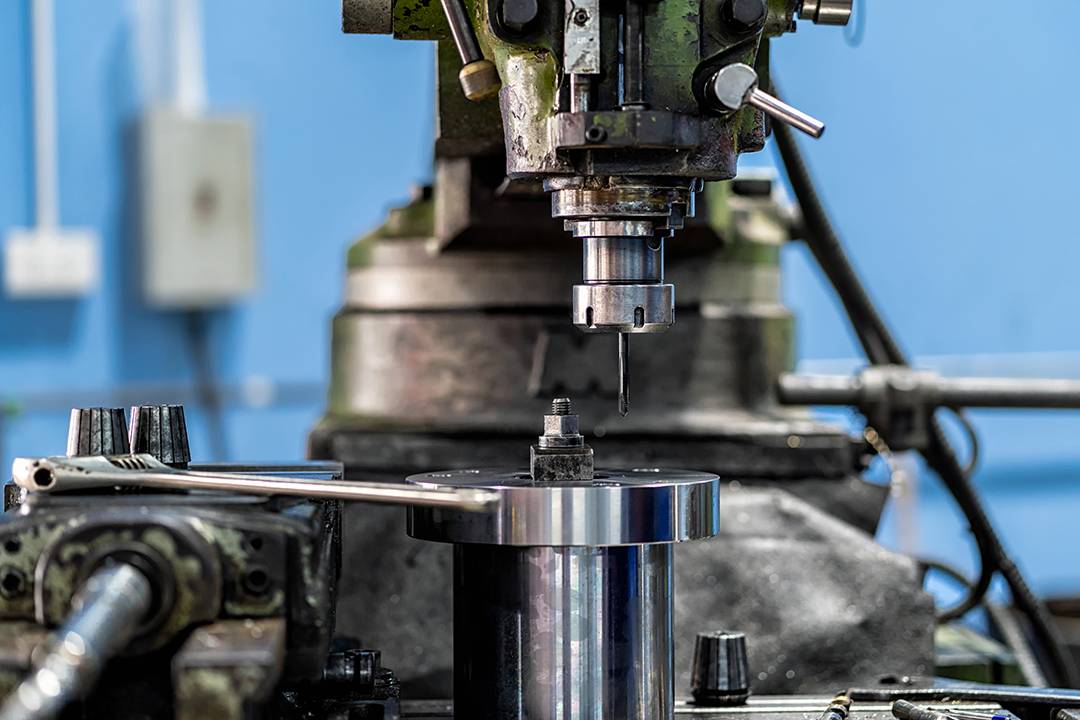
Managing Tool Wear and Performance in High-Precision CNC Operations
Cutting tool performance directly determines whether precision manufacturing operations succeed or fail. A fresh cutting tool produces parts within specification. That same tool, worn beyond acceptable limits, creates scrap and disrupts production schedules. Between these extremes lies a complex relationship involving material properties, cutting parameters, tool coatings, and monitoring strategies that separate efficient precision manufacturing from wasteful operations plagued by quality problems.
The American Machinist reports that tool-related issues account for approximately 20% of unplanned downtime in precision manufacturing facilities. When considering that modern CNC equipment costs hundreds of thousands of dollars and skilled machinists command premium wages, the economic impact of poor tool management becomes clear. Effective tool management isn’t optional—it’s fundamental to precision manufacturing profitability.
Understanding Tool Wear Mechanisms
Cutting tools don’t simply break—they degrade progressively through multiple wear mechanisms. Understanding these mechanisms enables predicting tool life, optimizing replacement intervals, and selecting appropriate tooling for specific applications.
Abrasive Wear
Abrasive wear occurs when hard particles in workpiece materials scratch tool surfaces, gradually removing material from cutting edges. Materials containing hard carbides, oxides, or other inclusions accelerate abrasive wear. Stainless steels, cast irons, and many aerospace alloys contain hard phases that rapidly wear cutting tools through this mechanism.
Tool coatings like titanium nitride (TiN), titanium carbonitride (TiCN), and aluminum oxide significantly reduce abrasive wear. These hard coatings protect underlying tool material from direct contact with abrasive workpiece constituents. Uncoated carbide tools might last minutes in abrasive materials while coated tools endure hours of cutting.
Adhesive Wear
Adhesive wear results from microscopic welding between tool and workpiece materials at cutting interfaces. High pressures and temperatures in the cutting zone cause material transfer from workpiece to tool, building up until fragments tear away, taking tool material with them. Adhesive wear particularly affects tools cutting ductile materials like aluminum, copper, and mild steels.
Proper coolant selection and application reduce adhesive wear by lowering cutting zone temperatures and providing boundary lubrication. Tool materials with low chemical affinity for workpiece materials also resist adhesion—for example, diamond-coated tools excel when machining aluminum because diamond doesn’t react with aluminum.
Diffusion Wear
At elevated temperatures, atoms from cutting tools diffuse into workpiece materials (and vice versa), weakening tool substrates and accelerating failure. Diffusion wear becomes significant above approximately 1200°F, making it particularly problematic when machining nickel alloys, titanium, and other high-temperature materials.
Ceramic cutting tools resist diffusion wear better than carbide tools because their constituent materials remain stable at higher temperatures. However, ceramics are more brittle, limiting their application to certain operations. Balancing wear resistance against mechanical strength represents a fundamental challenge in cutting tool selection.
Chemical Wear
Chemical reactions between cutting tools and workpieces or cutting fluids produce compounds that erode tool surfaces. Oxidation represents the most common chemical wear mechanism—oxygen reacts with tool materials, forming oxides that flake off during cutting. Sulfur and chlorine in some cutting fluids also cause chemical attack on tool materials.
Tool coatings provide chemical barriers between reactive environments and tool substrates. Aluminum oxide coatings particularly resist oxidation, extending tool life when machining at high speeds where oxidation becomes problematic.
Measuring and Monitoring Tool Wear
Precision manufacturing requires knowing when tools approach wear limits before quality problems occur. Multiple monitoring approaches provide this critical information.
Tool Life Testing
Systematic tool life testing establishes baseline performance for specific tool/material/parameter combinations. By running tools to failure under controlled conditions and measuring wear progression, manufacturers determine optimal tool change intervals. This data-driven approach prevents both premature tool changes (wasting tool life) and delayed changes (risking quality problems).
Tool life testing requires discipline—running parts to measure dimensional trends, examining wear patterns under magnification, and documenting results systematically. The investment pays dividends through optimized tool utilization and predictable quality.
In-Process Measurement
Periodic in-process measurement detects dimensional trends indicating tool wear. When a dimension gradually approaches specification limits over successive parts, tool wear is the likely culprit. Plotting measurements on control charts reveals these trends before parts exceed specifications.
Critical dimensions warrant more frequent monitoring than non-critical features. A dimension toleranced to ±0.0002″ requires closer attention than one toleranced to ±0.010″. Strategic measurement focuses inspection resources where they deliver maximum value.
Acoustic Emission Monitoring
Acoustic emission sensors detect ultrasonic frequencies generated during cutting. Worn tools generate different acoustic signatures than sharp tools, enabling real-time wear detection. These systems can trigger automatic tool changes or operator alerts when acoustic patterns indicate excessive wear.
While acoustic monitoring hardware costs several thousand dollars per spindle, the technology prevents scrap from worn tools and reduces inspection requirements. High-volume operations or particularly expensive materials often justify this investment.
Power Monitoring
Cutting power increases as tools wear and lose efficiency. Spindle power monitoring systems track this increase, alerting operators or machine controls when power consumption indicates significant wear. This approach requires baseline power data for sharp tools and understanding of how power evolves through tool life.
Power monitoring complements rather than replaces dimensional verification. A tool might cut efficiently yet produce out-of-specification features if geometric wear creates dimensional errors without significantly increasing cutting forces.
Optimizing Cutting Parameters for Tool Life
Cutting parameters—speed, feed, depth of cut, and coolant application—dramatically influence tool life. Optimization balances productivity against tool consumption costs.
Cutting Speed Effects
Cutting speed directly affects cutting zone temperatures. Higher speeds generate more heat, accelerating thermally activated wear mechanisms like diffusion and oxidation. However, speeds that are too low can cause built-up edge formation in some materials, leading to poor surface finish and premature tool failure.
Most materials have optimal cutting speed ranges where tool life, productivity, and surface finish reach acceptable compromises. Tool manufacturers publish recommended speeds, but actual optimal speeds depend on specific applications, machine rigidity, workpiece configurations, and coolant effectiveness.
Feed Rate Considerations
Feed rates affect chip thickness and cutting forces. Higher feeds produce thicker chips that carry more heat away from cutting zones, potentially reducing tool wear. However, increased feeds also increase mechanical stress on tools, possibly causing chipping or breakage.
Precision finishing operations typically use lighter feeds to minimize cutting forces and achieve superior surface finishes. Roughing operations can employ heavier feeds to maximize material removal rates while tolerating somewhat accelerated tool wear.
Depth of Cut Impacts
Depth of cut affects both tool engagement time and heat generation. Shallow cuts engage tools over longer path lengths, increasing total cutting time and potential for wear. Deep cuts generate more heat but complete operations faster. The optimal approach depends on part geometry, required surface finish, and tool capabilities.
Variable depth strategies—taking heavier roughing cuts followed by lighter finishing cuts—often provide the best overall results. Roughing operations prioritize material removal while finishing cuts ensure dimensional accuracy and surface quality.
Coolant Selection and Application
Cutting fluid selection significantly impacts tool life through multiple mechanisms: cooling, lubrication, chip evacuation, and chemical protection. The wrong coolant can halve tool life while the right coolant might double or triple it.
Coolant Types
Water-soluble coolants (emulsions) provide excellent cooling but limited lubrication. They work well for high-speed operations where heat removal is critical. Straight oils provide superior lubrication with minimal cooling—appropriate for low-speed, high-torque operations. Synthetic and semi-synthetic coolants balance cooling and lubrication while offering advantages like longer service life and reduced foaming.
Material-specific coolants optimize performance for particular workpiece types. Aluminum cutting fluids prevent built-up edge and staining. Titanium coolants resist the extreme chemical reactivity of titanium at cutting temperatures. Stainless steel coolants address the work-hardening characteristics of austenitic stainless steels.
Application Methods
Flood coolant remains the most common application method—high-volume coolant flow directed at cutting zones provides cooling, lubrication, and chip flushing. Through-tool coolant delivery directs high-pressure coolant through internal tool passages directly to cutting edges, dramatically improving cooling effectiveness and chip evacuation.
Minimum quantity lubrication (MQL) applies microscopic oil droplets in air streams, providing lubrication with minimal fluid consumption. MQL works particularly well for difficult-to-machine materials like titanium where conventional coolants can actually reduce tool life by thermal shocking.
Tool Selection Strategies
Choosing appropriate tools for specific operations requires understanding tool materials, geometries, and coatings.
Substrate Materials
High-speed steel (HSS) tools offer toughness and economy but limited heat resistance. They work well for interrupted cuts, threading operations, and applications where tool fracture risks outweigh wear concerns. Carbide tools provide superior wear resistance and allow higher cutting speeds but are more brittle than HSS. Most precision CNC operations use carbide tooling.
Ceramic tools excel at high-temperature applications, maintaining hardness at temperatures that destroy carbide tools. However, their brittleness limits applications to stable, continuous cutting operations. Cubic boron nitride (CBN) and polycrystalline diamond (PCD) tools handle the most demanding applications—hardened steels and abrasive materials respectively—but cost several times more than carbide tools.
Tool Geometry
Rake angles affect cutting forces and chip formation. Positive rake angles reduce cutting forces but weaken cutting edges. Negative rakes strengthen edges but increase forces. Clearance angles prevent rubbing behind cutting edges—too little clearance causes friction and heat, while excessive clearance weakens the edge.
Chip breaker geometries control chip formation, preventing long stringy chips that tangle around tools and workpieces. Proper chip breaking is essential for unattended CNC operation—tangled chips cause crashes, quality problems, and potential safety hazards.
Coatings
Modern tool coatings extend tool life 3-10 times compared to uncoated tools. TiN coatings provide general-purpose wear resistance at low cost. TiCN offers harder surfaces for abrasive materials. TiAlN maintains hardness at elevated temperatures. Diamond coatings excel for non-ferrous materials, particularly aluminum and graphite.
Multi-layer coatings combine different coating materials to leverage multiple beneficial properties simultaneously. These advanced coatings cost more but deliver exceptional performance in demanding applications.
Economic Analysis of Tool Management
Effective tool management requires understanding total tool costs—purchase prices plus consequences of tool failure.
A $50 insert that lasts twice as long as a $30 insert represents better value despite higher initial cost. Similarly, premium coated tools commanding 50% price premiums make economic sense when extending tool life 3-4 times. The calculation must include scrap costs when tools produce out-of-specification parts, machine downtime during unplanned tool changes, and labor costs for dealing with tool-related problems.
Many precision manufacturers discover that optimizing tool life rather than minimizing tool costs improves profitability. A conservative tool change strategy that changes tools at 70% of expected life might waste 30% of potential tool life but virtually eliminates scrap and unplanned downtime. The economics often favor this conservative approach, particularly for high-value parts or complex multi-operation components where a single bad part wastes significant manufacturing investment.
Documentation and Continuous Improvement
Systematic tool management requires documentation. Recording tool types, cutting parameters, tool life achieved, and failure modes creates a knowledge base supporting continuous improvement. This documentation reveals which tools outperform expectations, which operations consume tools excessively, and which parameter changes yield beneficial results.
Digital tool management systems track tool inventories, monitor tool life, and schedule replacements automatically. These systems prevent using worn tools, ensure proper tool selection for each operation, and generate reports revealing improvement opportunities. While implementing these systems requires effort, the payoff through reduced scrap, optimized inventory, and improved productivity justifies the investment.
When to Seek Manufacturing Partnership Support
Companies struggling with tool management challenges—excessive tool consumption, frequent quality problems from tool wear, or uncertainty about optimal tool selection—often benefit from manufacturing partnerships with shops that have deep tool management expertise.
Precision manufacturers with decades of experience have solved these problems repeatedly across diverse materials and operations. Rather than struggling through painful learning curves, companies can leverage this accumulated knowledge through strategic partnerships. The right manufacturing partner brings not just machining equipment but institutional knowledge about what works, what doesn’t, and how to optimize tool performance for specific applications.
Tool management represents a critical but often underappreciated element of precision manufacturing success. Systematic approaches to tool selection, wear monitoring, parameter optimization, and documentation separate efficient operations from those constantly fighting tool-related problems. Companies that master these fundamentals position themselves for sustained quality and profitability in competitive precision manufacturing markets.