
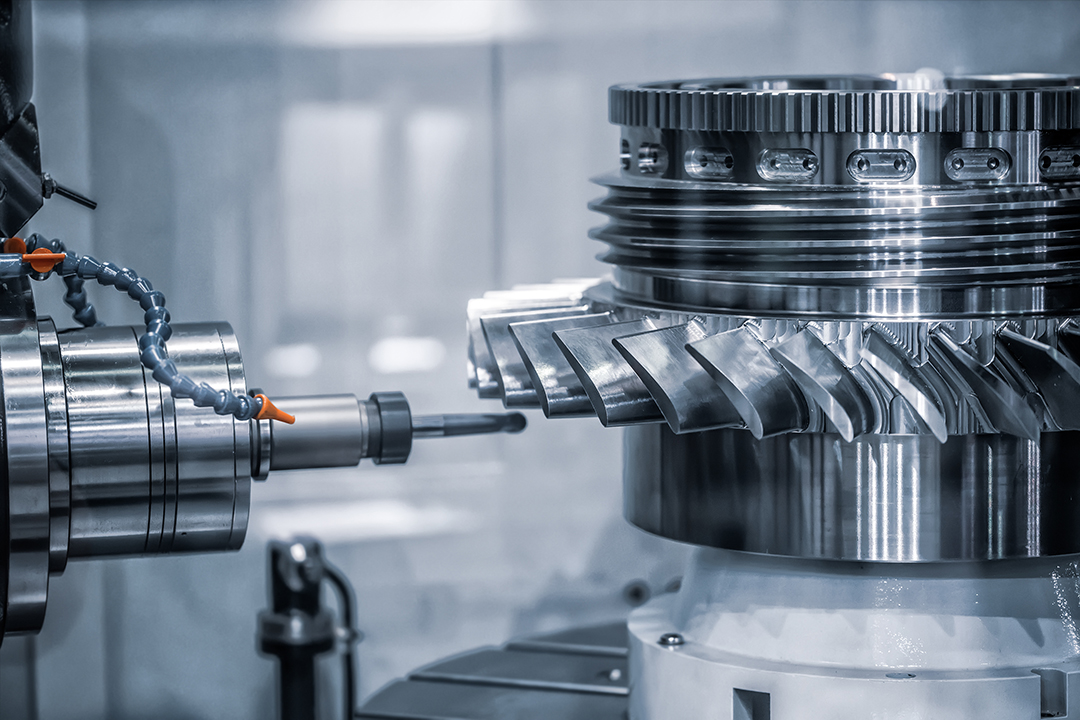
Titanium is one of the most specified materials in precision manufacturing and one of the most demanding to machine. Its combination of high strength, low density, and exceptional corrosion resistance makes it the material of choice across aerospace, medical, marine, and high-performance industrial applications. Its tendency to generate heat, work-harden at the tool interface, and spring back under cutting load makes it a material that separates experienced machine shops from shops that just own the equipment.
Understanding titanium’s properties and machining behavior helps engineers make better material decisions and helps buyers evaluate whether a shop is genuinely capable of producing titanium components to specification. FM Machine’s precision CNC machining services include titanium and other difficult-to-machine materials across a range of industries and applications.
Why Titanium Is Specified
Titanium’s appeal comes from a combination of properties that no other common engineering metal matches simultaneously:
- High strength-to-weight ratio: Ti-6Al-4V has tensile strength comparable to many steels at roughly 60% of steel’s density — a significant advantage in aerospace structures, medical implants, and performance applications where weight is a design constraint
- Corrosion resistance: Titanium forms a stable oxide layer that resists corrosion in seawater, chlorides, and many aggressive chemical environments where stainless steel is insufficient
- Biocompatibility: Grade 4 and Ti-6Al-4V ELI are established biocompatible materials used extensively in orthopedic implants, dental implants, and surgical instruments
- High temperature performance: Titanium retains useful mechanical properties at temperatures where aluminum degrades significantly
- Non-magnetic: Important for applications near sensitive electronics or MRI environments
Common Titanium Grades in Precision Machining
Not all titanium is the same. The grade determines properties, machinability, and appropriate applications:
- Grade 1–4 (commercially pure titanium): Increasing strength with decreasing ductility. Grade 2 is the most commonly machined CP titanium — good corrosion resistance, moderate strength, used in chemical processing, marine, and medical applications
- Grade 5 (Ti-6Al-4V): The workhorse of aerospace and medical titanium. High strength, good fatigue resistance, widely available. The alpha-beta microstructure is more difficult to machine than CP grades but produces superior mechanical properties
- Ti-6Al-4V ELI (Extra Low Interstitial): Medical grade — tighter limits on oxygen, iron, and carbon for improved fracture toughness and biocompatibility in implantable devices
- Grade 23: Another designation for Ti-6Al-4V ELI, commonly specified on medical device drawings
Why Titanium Is Difficult to Machine
Titanium’s material properties that make it attractive also make it challenging to cut:
Low Thermal Conductivity
Titanium conducts heat poorly — approximately 6 BTU/hr·ft·°F compared to 100+ for steel and 900+ for aluminum. Heat generated at the cutting edge has nowhere to go except into the tool. This rapidly elevates tool temperature, accelerates tool wear, and can cause built-up edge, smearing, and dimensional inaccuracy. Flood coolant directed precisely at the cutting zone is essential, not optional.
Work Hardening
Titanium work-hardens in the cutting zone under the tool. A tool that rubs rather than cuts — due to worn edges, insufficient feed rate, or poor cutting geometry — quickly encounters a hardened surface that accelerates further tool wear in a self-reinforcing failure mode. Keeping tools sharp and feeds adequate is critical.
Springback
Titanium’s high elastic modulus means it deflects under cutting load and springs back when the tool exits. For tight-tolerance bores and precision diameters, this springback must be accounted for in the cutting parameters and finishing strategy. A bore that measures in tolerance during cutting may measure undersized after the tool retracts.
Chip Handling
Titanium produces long, stringy chips that wrap around tooling, damage finished surfaces, and create fire risk if they accumulate. Chip management — through toolpath design, cutting parameters, and coolant strategy — is a process consideration that separates shops with titanium experience from those without it.
Machining Strategies for Titanium
Successful titanium machining comes down to a few consistent principles:
- Use sharp, high-quality carbide tooling — coated grades designed for titanium (AlTiN, TiCN) significantly extend tool life
- Maintain adequate feed rate — rubbing generates heat; cutting generates chips that carry heat away
- Use conservative speeds — titanium machines at significantly lower surface speeds than steel or aluminum
- Apply generous, well-directed flood coolant — not as a safety measure but as a functional requirement
- Avoid interrupting cuts where possible — re-engaging a work-hardened surface accelerates tool wear
- Plan for additional tool changes on long runs — tool wear rate in titanium is higher than in most other metals
When to Specify Titanium — and When Not To
Titanium is the right choice when the application genuinely requires its unique combination of properties. It is sometimes overspecified when a less expensive, more machinable material would perform equally well.
Consider titanium when: weight is a design constraint, corrosion resistance in aggressive environments is required, biocompatibility is necessary, or operating temperature exceeds aluminum’s useful range.
Consider alternatives when: strength requirements can be met by steel or aluminum, cost is a primary driver, the corrosion environment is compatible with stainless, or lead time is critical and titanium stock availability is a constraint.
A machine shop with material experience can help evaluate these trade-offs. FM Machine works with engineers on prototype and development components where material selection is still in progress and input from the manufacturing side adds value.
Source Titanium Components From a Shop With the Experience to Machine It Correctly
Titanium machining done wrong produces overheated tools, poor surface finish, and dimensional drift. Done correctly, it produces components that perform at the limits of what engineering materials can offer. FM Machine has the experience, tooling practices, and process controls to machine titanium components to specification.
Request a quote for your titanium component requirements — send your drawings and we’ll respond within 24 hours.